
This post is about how AI can serve as a pantry-assistant to get better insights in your diet and nutritional intake. I am not a dietician, I do not give out dietary advice. If you feel that you need help getting your food and diet under control, please consult your GP or dietician first.
About a year ago I realized I needed to start eating healthier. I always thought I was doing okay. I made sure to balance my meals, I didn’t eat junk food, all those things. But it turned out there were still a lot of tiny little things sneaking into my diet. Things that ultimately were messing with my health. A bit too much salt here, too much red meat and processed foods, low fiber intake and too much carbs. It wasn’t dramatic, but it needed to change.
After talking with a dietician, the advice was simple. Get more fiber, get more nutrients, reduce your saturated fat intake and increase your healthy fat intake. Easier said than done though. I was genuinely under the impression my diet was reasonably healthy. To discover where the problem was at, I build an AI Pantry assistant for myself, here’s how I did it.
Discovering the real problem
I ate plenty of fresh vegetables and not overly processed foods. But I also had a quiet habit of adding condiments and extras to almost everything. Turns out those habits were doing more damage than I realized. Combined with a fairly high carb intake and the fact that I was cooking in oils that added even more saturated fat on top, the picture started to make sense.
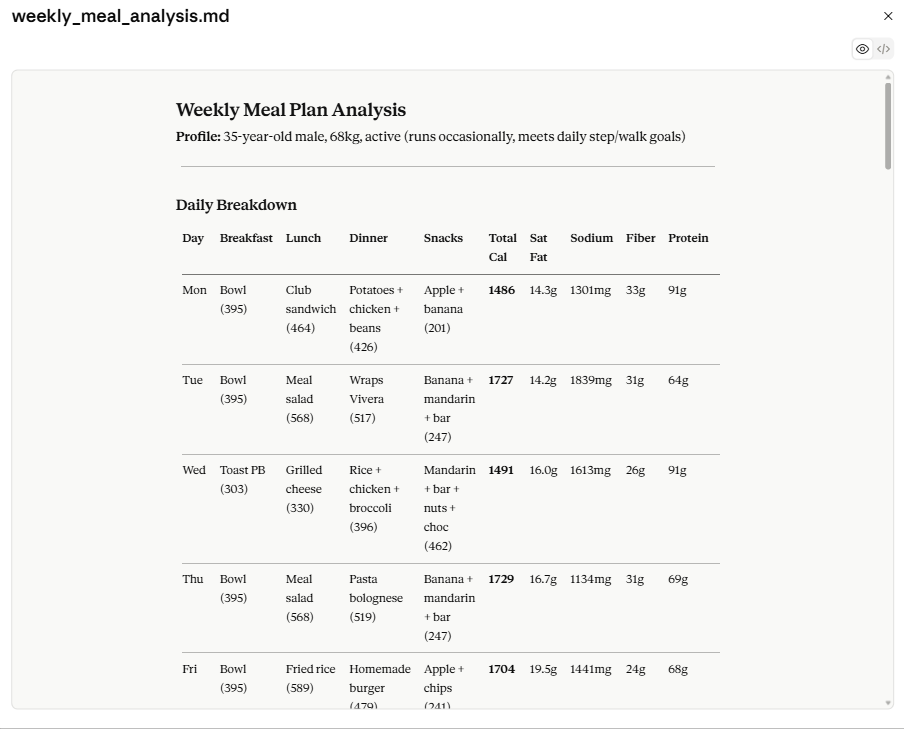
So I did something a little radical. I spent a full day scanning and uploading every label in my kitchen into Claude. Every food item and daily product I actually use. Then I gave it a handful of my regular meal recipes and asked it to break them down. The result was eye-opening. My meals were genuinely solid on vitamins and other nutrients, that part wasn’t the issue. But my saturated fat and carb intake were both well above what they should have been.
I specifically used Claude for it’s projects-functionality. But any AI-agent should do. If you need help drafting prompts, check out my earlier post on Prompt engineering.
The unglamorous part
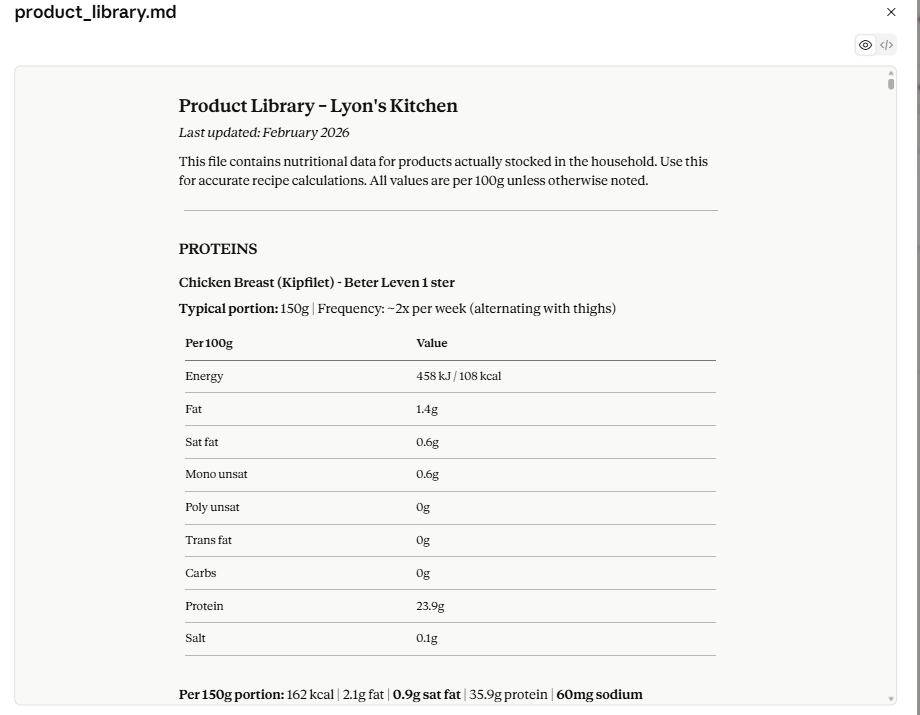
There was no shortcut here, and I want to be upfront about that. I went through my pantry, scanned all the labels one by one. Then I started building an actual digital library of nutritional values for the things I buy and eat regularly. Sometimes the packaging didn’t have full information. Which happens more often than you’d expect, I looked it up online to try and fill the gaps.
My product library, structured as an .MD file, now contains over 12,000 lines of food and nutrient data. I took photo’s of labels, and where possible I copied the data directly from the producers websites or from the grocery-store’s website. In the Netherlands it’s mandatory to make this data available so it was quite easy to grab it and put it into Claude.
Giving it a standard to work within
Before checking any of this against a benchmark, I gave Claude access to credible, science-backed dietary sources. Think of governmental health guidelines and independent peer-reviewed research. I don’t want to come off as a food influencer here either, because I am not. I’m not here to share recipes. I’m writing this to share a method that can actually help you get a bit of insight and control over your dietary habits.
Once my pantry was complete, I gave Claude the instructions it needed in the form of a single command prompt. In short, it was not allowed to simply suggest recipes. It had to make sure they actually fit a credible dietary standard. In my case, that meant working from the guidelines published by Voedingscentrum, the Dutch governmental nutrition authority. I also scaled everything for cooking for 1-2 people. Most recipe content online assumes a family of four and a dinner party. Claude had access to the internet to search for existing recipes as inspiration. But I gave it the hard rules that it had to use my pantry products to actually make them. No compromises.
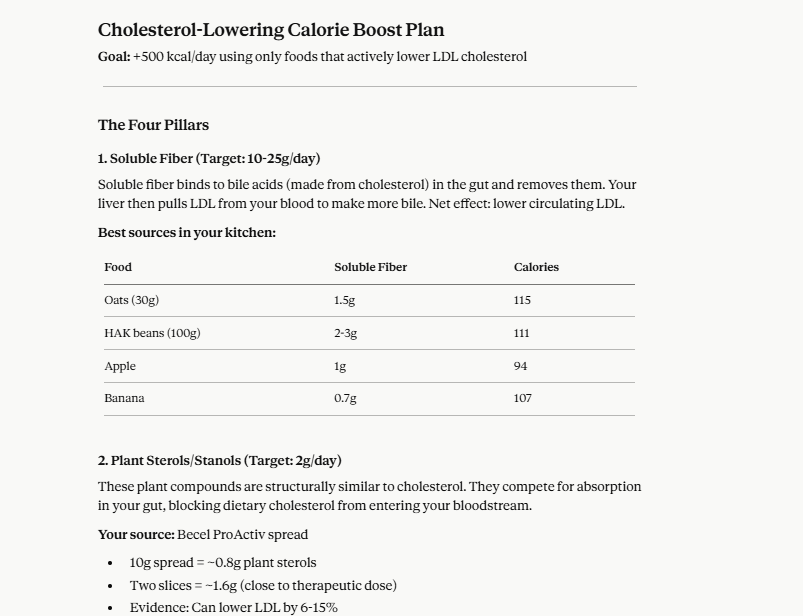
This is the part I’d push back on if you try this yourself without a guardrail. I didn’t ask Claude to invent dietary advice from nothing. I gave it an existing, credible framework and told it to operate inside that, using my own pantry as the available ingredients. That’s a meaningfully different request than “tell me what’s healthy,” and the output reflects it. If you blindly trust what AI tells you to do, you”ll end up regretting it. We all heard the bad stories of people blindly following AI advice and ending up with a major deficiency because the AI told them “this is bad”.
Why I still check everything
Here’s the part I think matters most. It’s also the part most people skip when they talk about using AI for things like this. I don’t take any of it’s output as true. I read all the labels myself before I started. I sanity checked the nutritional math it gave me. If something looked off, I gave that as feedback to the AI agent. Then I gave it the reasons plus sources why it was wrong.
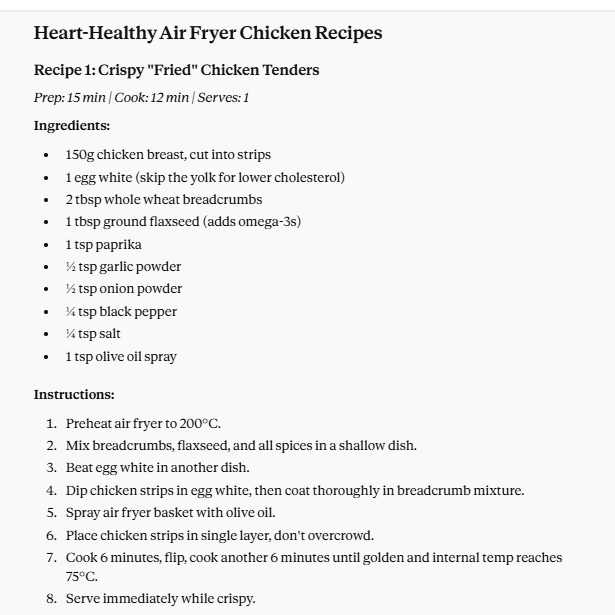
AI didn’t replace my judgment here. But it did replace the repetitive, manual work of cross-referencing every ingredient against a dietary standard every time I wanted to make a new recipe. That’s a completely different thing, and it’s the distinction I think gets lost in a lot of AI hype right now. Outsource the legwork, not the responsibility.
What my food habits look like now
These days, when I want to cook, I ask for a recipe based on what I usually have stocked, scaled for 1-2 people. I make sure it’s built around what Voedingscentrum considers a balanced meal. What comes back is noticeably different from what I was eating a year ago. Less reliance on the same processed staples andfewer meals that quietly carry more sodium or sugar than I’d have guessed. My recipes are also on a rotation that actually reflects what I say I want to eat rather than what’s just convenient on a random weekday. The results show, for me at least. I feel better in my body then a year ago and my dietician confirmed my diet and weight are on-track and responsible. Overall I “feel” more healthy and in control. Of course that last one is subjective, but I did wanted to mention it.
The honest takeaway
AI didn’t make the decision to eat healthier for me. I made that decision. What it did was make it easier to follow through. Because I gave it real data about my own kitchen and a real standard to measure against. Instead of a vague instruction and a hope for the best mentality.
I learned so much about what’s actually in my food that I now handle most of this without AI at all. I still ask occasionally, whether a meal fits the dietary requirements. Or for a bit of inspiration when I’m out of ideas. But the bulk of the habit change has stuck on its own, I don’t need the AI agent anymore.
That’s the pattern I keep coming back to with every Claude Project I run, whether it’s this one, my YouTube channel, or this website. The output is only as good as what you feed it and the standard you hold it to. Everything else is just a chatbot guessing.
The results speak for themselves, at least for me. I feel better in my body than I did a year ago, and my dietician has confirmed my diet and weight are on track. I’ll admit the “feeling healthier” part is subjective, but it’s real enough to me that it’s worth mentioning. AI didn’t hand me that. It just helped me build the habits that did.